A local chef dished out his passion for food and people during a curated segment at First Thursday on Thursday, Nov. 7, at the Chrysler Museum of Art.

The segment was part of the museum’s monthly event series, highlighting its current exhibit, “Farm to Table: Art, Food, and Identity in the Age of Impressionism.” The museum foyer transformed into a bustling farmers’ market featuring local businesses selling artisanal foods and crafts.
Mark Castro, director of Curatorial Affairs, shared how he discovered Mercy Chefs, a local faith-based non-profit organization dedicated to serving high-quality meals to those impacted by disaster, crisis, and poverty. Chef Gary LeBlanc and his wife, Ann, founded Mercy Chefs.
“That really stuck with me. The idea of this moment when you are at your most vulnerable, and the thought that someone is handing you a really good, warm, quality meal, and what an impact that would make,” he said.
Mark shared the story behind Mercy Chefs and how Chef LeBlanc and his wife, Ann, were inspired to start the non-profit organization after dealing with the devastating aftermath of Hurricane Katrina, which struck LeBlanc’s hometown, New Orleans, LA.
LeBlanc entered the stage with a warm smile, donning his double-breasted chef’s jacket and welcoming aura.
“We’re so honored to be here tonight. This is such a beautiful facility, and it’s wonderful to be here. It’s great,” Leblanc said.
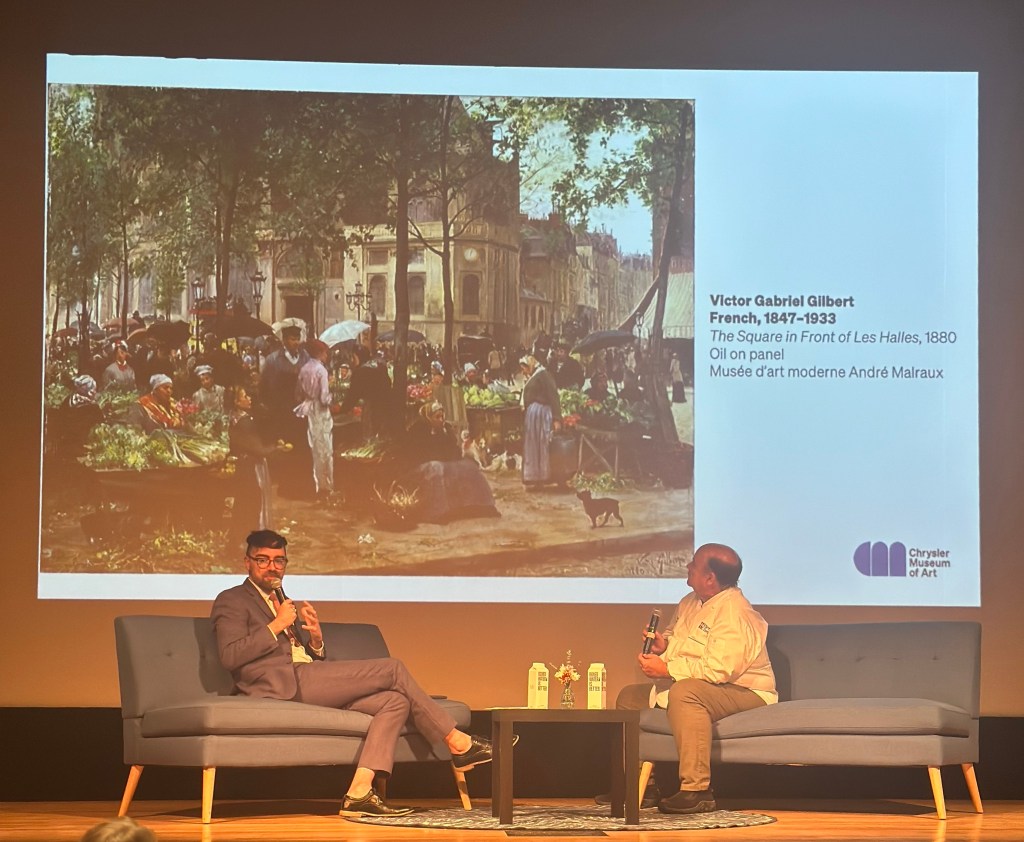
LeBlanc provided more insight into the backstory of Mercy Chefs and how his wife, Ann, was inspired to expand their global mission of serving quality meals to the local community during an evening food run.
“We were driving home, and she said, let’s get chicken for dinner, so we stopped at Moseberth’s. We ran in, and she parked at the church across the street. The marquee said ‘Vacation Bible School: Free Dinner Nightly.’ It triggered something in her mind: what about the kids that do free or reduced meals at school? What do they do during the summer? We need to do something here in our own backyard,” he said.
The backdrop of Mark and LeBlanc’s conversation featured a slideshow of images featuring art from the Farm to Table exhibit. Mark invited LeBlanc to share what each image represents to him as a chef and more importantly, a humanitarian. Haying Scene, painted by Impressionist artist Julien Dupre, struck a personal chord with LeBlanc as he recounted his time spent in Romania and Ukraine during the Ukrainian Conflict.
“I’ve seen the hard, tireless work that people put into the fields [out there]. The only thing they have left now is a little garden, and they subsist out of their garden. For them to leave means leaving their food source. It’s amazing to hear the stories of what they hold onto… it [the portrait] takes me back to the bounty of Romania and Ukraine,” he said.
Mark and LeBlanc’s conversation continued as they examined Impressionist paintings from artists Alfred Sisley, Victor Gabriel Gilbert, and Marie Bracquemond. LeBlanc’s reflections on the people and places he served painted a picture to the audience: we are all just one disaster or crisis away from having the luxury of food taken away from us.
LeBlanc reinforced this truism by emphasizing the importance of creating dignity while serving free meals to communities experiencing a disaster or crisis.
“It’s this critical moment when you hand them that meal. There’s a connection that happens–you sort of speak life [into them], you bring humanity back to them. It’s an obligation that we know and take seriously, “ he said.
The Farm to Table: Art, Food, and Identity During the Age of Impressionism exhibit at the Chrysler Museum will be open until Jan. 5, 2025. LeBlanc and the Mercy Chefs team can be found serving their local community in Portsmouth, VA, in addition to any areas impacted by disasters or crises.

 K.White Media
Leave a comment